A well-lit property doesn’t just look good, it actively deters intruders and makes your home safer at night. Outdoor security lighting has evolved far beyond the single motion-sensor bulb screwed above the garage door. Today’s systems combine smart technology, energy efficiency, and strategic placement to create layers of protection around your home. Whether you’re upgrading an existing setup or starting from scratch, understanding the types, placement, and installation options will help you build a lighting plan that actually works. This guide covers what homeowners need to know to choose, install, and optimize outdoor home security lighting for real-world protection.
Table of Contents
ToggleKey Takeaways
- Well-placed outdoor security lighting deters intruders and improves nighttime safety by making your home a less attractive target for burglars.
- Motion-activated lights should be mounted 6–8 feet high near entry points, with floodlights for wide coverage and spotlights to eliminate dark corners and shadows.
- Combine hardwired fixtures for reliable, bright illumination with battery-powered or solar options for flexibility, while ensuring all outdoor electrical work follows local building codes and NEC requirements.
- Strategic layering of overlapping light coverage creates multiple sensor triggers that catch intruders and provide backup if one fixture fails.
- Smart security lighting with app control, geofencing, and integration with cameras and alarms creates a coordinated home security system more effective than standalone components.
Why Outdoor Security Lighting Matters for Your Home
Outdoor lighting serves two critical functions: deterrence and detection. Most burglaries happen under cover of darkness, and statistics consistently show that well-lit homes are passed over in favor of darker targets. A visible lighting system signals that the property is actively maintained and monitored.
Beyond crime prevention, security lighting improves everyday safety. It illuminates walkways, steps, and driveways, reducing trip hazards and making it easier to navigate your property after dark. For homes with children, pets, or elderly residents, this isn’t optional, it’s essential.
Modern outdoor lighting security also integrates with broader home security systems. Many fixtures now sync with cameras, doorbells, and smartphone alerts, creating a coordinated response when motion is detected. This layered approach is more effective than any single component working alone.
Finally, there’s the visibility factor for emergency responders. A well-lit address and entryway can shave critical seconds off response times when every moment counts. If you’re already investing in cameras or alarm systems, the lighting infrastructure should be part of that same conversation.
Types of Outdoor Security Lights and How to Choose
Not all outdoor security lights are built the same. The right choice depends on your property layout, power access, and specific security needs. Here’s a breakdown of the most common types and where each one shines.
Motion-Activated Lights
Motion-activated lights are the backbone of most residential security setups. These fixtures use passive infrared (PIR) sensors to detect heat signatures from people or animals, triggering the light to turn on. They’re energy-efficient because they only run when needed, and they startle intruders who think they’re approaching undetected.
When shopping for motion lights, pay attention to detection range and sensitivity settings. Most residential models detect motion within 30 to 50 feet, with adjustable angles between 180° and 270°. Higher-end units let you tweak sensitivity to avoid false triggers from small animals or wind-blown branches.
Install motion lights near entry points, front and back doors, side gates, and garage access. Pair them with a manual override switch so you can leave them on continuously when hosting guests or working outside after dark. Many smart home systems now offer motion lights with app control, letting you adjust settings remotely and receive alerts when the light activates.
One common mistake: mounting motion sensors too high. Install the sensor 6 to 8 feet above the ground for optimal human detection. Too high, and the sensor’s field of view narrows: too low, and you’ll get constant triggers from passing cats.
Floodlights and Spotlights
Floodlights cast wide, even illumination across large areas, ideal for driveways, backyards, and side yards. They typically range from 1,500 to 3,000 lumens and can cover 50+ feet. LED floodlights are the standard now, offering better energy efficiency and longer lifespans than halogen alternatives (25,000+ hours vs. 2,000 hours).
Spotlights, by contrast, focus a narrow beam on specific targets: a doorway, a gate latch, or a dark corner where shrubs meet the fence line. Use spotlights to eliminate shadows and highlight vulnerable zones that floodlights might wash over.
For maximum coverage, combine both. Mount a dual-head LED floodlight with motion activation over the garage, and add a spotlight on the side gate. This creates overlapping fields of light with no dead zones. According to recent reviews of outdoor security cameras, many top-rated systems now include integrated floodlights that activate when the camera detects motion, a solid option if you’re already upgrading your surveillance setup.
Wiring is the main installation consideration. Floodlights require a 120V circuit and must be hardwired into your home’s electrical system. If you’re not comfortable working with live wiring, hire a licensed electrician. Most jurisdictions require a permit for new outdoor electrical runs, especially if you’re trenching cable or adding a new circuit breaker.
Best Placement Strategies for Maximum Security Coverage
Even the best smart security lighting won’t help if it’s poorly placed. Start by walking your property at night and noting the darkest areas, these are your priority zones.
Entry points come first. Every door (front, back, side, garage) should have dedicated lighting within 10 feet. Motion-activated fixtures work well here, but consider adding a dusk-to-dawn photocell light near the front door for continuous visibility.
Pathways and driveways need consistent illumination to prevent trips and falls. Low-voltage path lights (12V systems) are DIY-friendly and don’t require permits in most areas. Space fixtures 8 to 10 feet apart for even coverage without harsh glare.
Dark corners and blind spots are where intruders probe first. Check areas behind sheds, along fence lines, and near basement windows. A single well-placed spotlight can eliminate these vulnerabilities. Use warm white (2700K–3000K) bulbs near living spaces to avoid the harsh, institutional look of cool white LEDs.
Overlapping coverage is key. Your lights should create layers so that an intruder moving toward the house triggers multiple sensors. This also ensures backup if one fixture fails. Avoid lighting your own windows from the outside, this creates glare that makes it harder to see out at night.
Don’t forget the garage and side gates. These are common entry points that homeowners overlook. A motion-activated floodlight above the garage door and a spotlight on the side gate latch cover two of the most frequent break-in zones.
Finally, consider your neighbors. Aim fixtures down and away from adjacent properties. A hooded or shielded fixture reduces light trespass and complies with many local ordinances that restrict upward light spill.
Installation Tips and Smart Features to Consider
Before you drill anything, check your local building codes. Outdoor electrical work often requires a permit, especially if you’re adding new circuits or running conduit underground. Even low-voltage systems may need inspection if they’re part of a larger remodel.
Hardwired vs. Battery-Powered: Hardwired fixtures offer unlimited runtime and brighter output, but installation is more involved. You’ll need to shut off power at the breaker, run 14/2 or 12/2 NM-B cable (depending on circuit amperage), and connect to a weatherproof junction box. Always use a GFCI-protected circuit for outdoor lighting, required by the National Electrical Code (NEC) for all outdoor receptacles and many lighting applications.
Battery-powered and solar options are easier to install but come with trade-offs. Battery models require regular recharging or replacement, and solar lights depend on consistent sunlight, a challenge in shaded or northern-exposure areas. If you go solar, look for units with separate solar panels you can position in full sun while mounting the light in a shaded spot.
Smart security lighting has become mainstream. Wi-Fi-enabled fixtures let you control lights remotely, set schedules, and integrate with voice assistants. Many systems now support geofencing, which automatically turns lights on as you approach home. Integration with platforms like home automation hubs can link your lighting to cameras, locks, and alarm systems for coordinated responses.
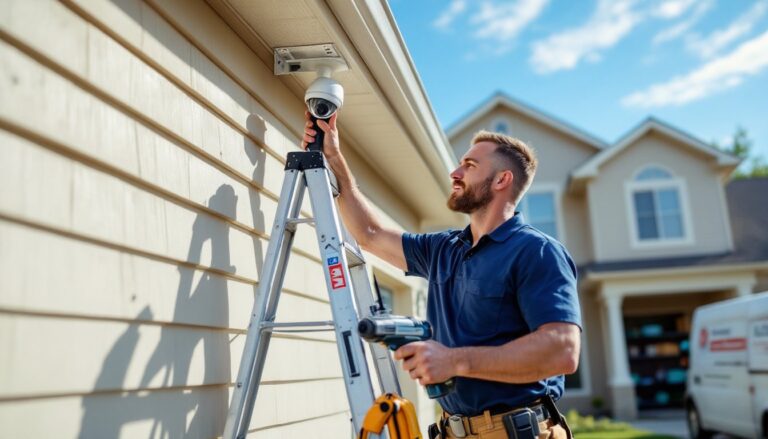
When wiring motion sensors, follow the manufacturer’s template exactly, most provide a paper guide to mark screw holes. Use outdoor-rated anchors and screws (usually included). If mounting to vinyl siding, locate a stud or use a backer block between the siding and sheathing to prevent fixture sag over time.
Safety gear: Wear safety glasses when drilling overhead, and use a sturdy ladder with a helper to stabilize it. If working on a second story or steep roof pitch, this is a job for a pro. Electrical work requires the power to be off at the breaker and tested with a non-contact voltage tester before you touch any wires.
Calibrate your motion sensors after installation. Walk the detection zone and adjust the sensitivity dial until the light triggers reliably for human movement but ignores smaller animals. Set the timer to keep lights on for 1 to 3 minutes, long enough to be useful, short enough to conserve energy.
Conclusion
Outdoor security lighting isn’t a one-size-fits-all project. The best systems combine the right fixture types, strategic placement, and smart features tailored to your property’s layout and your household’s needs. Start with high-priority zones, entry points and dark corners, then expand coverage as budget and time allow. With the right approach, you’ll have a safer, more functional property that works as hard at night as it does during the day.