Two megapixel cameras occupy an odd spot in the security market. They’re not entry-level junk, but they’re not the ultra-HD models plastered across every marketing page either. For homeowners weighing cost against capability, the question isn’t whether 2MP cameras work, it’s whether they work for your specific needs. A 2MP camera delivers 1080p Full HD footage, which sounds solid on paper. But resolution is only part of the equation when you’re trying to identify a package thief or monitor a dark driveway at 2 a.m. This guide breaks down what 2MP cameras actually deliver, where they excel, and when you should spend more.
Table of Contents
ToggleKey Takeaways
- A 2 megapixel security camera delivers 1080p Full HD video (1920×1080 pixels), providing sufficient detail to identify faces, license plates, and activity within 15–25 feet depending on lens and lighting conditions.
- 2MP cameras excel for residential monitoring of covered entry points, driveways, garages, and hallways, but fall short for large properties, commercial spaces, or high-speed license plate capture.
- Invest in quality sensors, lens focal length (2.8mm–6mm depending on coverage area), H.265 compression codec, and 30fps frame rate to maximize the effectiveness of your 2 megapixel security camera system.
- Proper installation at 8–10 feet height with a 15–30 degree downward angle, combined with motion detection and network security (strong passwords, WPA3 encryption), ensures optimal performance and protection.
- A well-configured 2MP system costs $30–$80 per unit with lower storage needs (1–2 GB daily per camera) and bandwidth usage (2–4 Mbps), making it an affordable solution for most homeowners compared to 4K alternatives.
- For most single-family homes, a mixed approach using 2MP cameras for wide coverage and higher-resolution models at critical choke points like gates or driveways provides the best balance of cost and capability.
What Is a 2 Megapixel Security Camera?
A 2 megapixel (2MP) security camera captures video at a resolution of 1920×1080 pixels, commonly known as 1080p or Full HD. That’s the same resolution as most Blu-ray movies and many streaming services. In practical terms, a 2MP camera records roughly two million pixels per frame, which provides enough detail to identify faces, license plates, and activity within a reasonable range, typically 15 to 25 feet depending on lens focal length and lighting conditions.
Most 2MP cameras use either HD-TVI, HD-CVI, AHD (analog over coax), or IP (network-based) transmission formats. IP cameras dominate the current market because they integrate easily with Wi-Fi networks and smartphone apps, but coax-based systems are still common in retrofit installations where existing cabling is already in place.
Compared to older 960H or 720p analog cameras, 2MP models offer a noticeable upgrade in clarity. But, they fall short of 4MP, 5MP, and 8MP (4K) cameras now widely available. The trade-off is cost and storage: higher-resolution cameras demand more bandwidth and larger hard drives or cloud subscriptions.
Understanding Resolution and Image Quality
Resolution alone doesn’t determine image quality. A 2MP camera with a cheap sensor and poor lens can produce muddier footage than a well-built 1MP model. Key factors include:
- Sensor size and type: Larger sensors (like 1/2.8″ or 1/2.7″) capture more light than smaller ones (1/3″ or 1/4″), improving low-light performance. CMOS sensors are standard: Starlight or low-lux sensors perform better at night.
- Lens quality and focal length: A 2.8mm lens gives a wide field of view (about 90–100 degrees) but less detail at distance. A 6mm or 12mm lens narrows the view but increases zoom and detail for focused monitoring, like a driveway or gate.
- Compression codec: H.265 (HEVC) compresses video more efficiently than H.264, cutting storage needs by up to 50% without losing quality. Older cameras using MJPEG create massive file sizes and aren’t practical for continuous recording.
- Frame rate: 30 frames per second (fps) is ideal for smooth playback and motion detection. Budget 2MP cameras may drop to 15–20 fps, causing choppy footage during fast motion.
A well-configured 2MP camera in good lighting can capture enough detail to read a house number from 20 feet or identify a person’s clothing and build. At night or in poor weather, expect that range to shrink unless the camera includes infrared (IR) LEDs or starlight technology.
Where Does a 2MP Camera Work Best?
Two-megapixel cameras excel in situations where coverage matters more than forensic-level zoom. They’re a smart choice for:
- Covered porches and entryways: A 2MP camera with a 2.8mm or 3.6mm lens can monitor your front door, capture package deliveries, and identify visitors before you open the door. Infrared range of 30 to 50 feet handles nighttime coverage.
- Garages and driveways (short to mid-range): If your driveway is 20–30 feet long, a 2MP camera with a slightly narrower lens (4mm to 6mm) provides enough detail to catch license plates on parked cars and activity near garage doors.
- Interior hallways and rooms: Indoors, lighting is more controlled and distances shorter. A 2MP camera easily covers a living room, hallway, or nursery without overkill.
- Side yards and pathways: Narrow spaces benefit from wide-angle lenses. A 2MP camera can monitor gates, air conditioning units, or basement windows where intruders might probe.
Where 2MP cameras fall short:
- Large yards or parking areas: If you need to monitor a 50-foot driveway, backyard, or open lot, 2MP footage becomes too pixelated to identify details. Step up to 4MP or 5MP cameras or use PTZ (pan-tilt-zoom) models.
- High-traffic commercial spaces: Retail stores, warehouses, or offices benefit from higher resolution to track inventory, read documents, or capture fine details in crowded spaces.
- License plate capture at speed: Dedicated LPR (license plate recognition) cameras use higher resolution, faster shutters, and optimized lenses. A standard 2MP camera can capture plates on stationary or slow-moving vehicles but struggles with cars moving over 15 mph.
For most single-family homes with typical lot sizes, a mix of 2MP and higher-resolution cameras provides the best balance. Use 2MP for wide coverage and bump up resolution for critical choke points like front gates or driveways.
Key Features to Look for in a 2 Megapixel Camera
Not all 2MP cameras are built equally. When shopping, prioritize these features based on your install location and monitoring goals:
Night vision: Look for cameras with IR LEDs rated for at least 30 meters (about 100 feet). Starlight or color night vision models use larger sensors and ambient light to deliver color footage in low light, but they cost more. Standard IR cameras switch to black-and-white mode after dark.
Weatherproofing: Outdoor cameras should carry an IP66 or IP67 rating, meaning they’re dust-tight and can handle heavy rain and snow. Cameras installed under eaves can get by with IP65. Check the operating temperature range if you live in a region with harsh winters or desert heat.
Power options: PoE (Power over Ethernet) cameras draw power and transmit data over a single Cat5e or Cat6 cable, simplifying installation and eliminating the need for nearby outlets. 12V DC cameras require separate power adapters. Battery-powered or solar-recharged models work for remote locations but may throttle recording to conserve power.
Motion detection and alerts: Built-in PIR (passive infrared) sensors reduce false alarms from swaying branches or passing cars by detecting heat signatures. Smart detection features, like person, vehicle, or pet recognition, require cameras with onboard AI or cloud processing. Home security cameras with customizable motion zones let you ignore sidewalks or streets and focus on your property.
Storage options: Cameras can record to local microSD cards (typically 64GB to 256GB), network video recorders (NVRs), or cloud storage. Local storage avoids monthly fees but is vulnerable to theft or damage. Cloud storage offers remote access and redundancy but costs $3–$10 per camera per month. Hybrid systems use both.
Two-way audio: Useful for doorbell cameras or porch monitors, allowing you to speak to delivery drivers or scare off prowlers. Check for noise cancellation to reduce wind and background noise.
App and integration: Most IP cameras ship with a proprietary smartphone app. Test reviews on app stability, live-view lag, and playback controls before buying. Cameras compatible with ONVIF standards work with third-party NVRs and software, giving you flexibility. Integration with Alexa, Google Assistant, or HomeKit adds voice control and smart home routines.
Pros and Cons of 2MP Cameras for Home Security
Pros:
- Affordable: 2MP cameras typically cost $30 to $80 per unit, making multi-camera systems budget-friendly. According to Digital Trends, many capable 2MP models deliver solid performance without premium pricing.
- Lower storage demands: Recording 2MP footage at 30fps with H.265 compression uses roughly 1 to 2 GB per camera per day in continuous mode. A 1TB hard drive can store weeks or months of footage from a 4-camera system.
- Less network bandwidth: IP cameras streaming 2MP video consume about 2 to 4 Mbps per camera. That’s manageable even on modest home internet connections, whereas 4K cameras can choke Wi-Fi networks.
- Wide compatibility: Because 2MP is an established standard, most NVRs, DVRs, and software platforms support it without firmware headaches or compatibility issues.
- Sufficient for most residential use: For identifying people, monitoring entry points, and reviewing incidents, 1080p is usually enough. Courts and insurance companies accept 2MP footage as evidence.
Cons:
- Limited zoom and detail: Enlarging or zooming 2MP footage during playback quickly reveals pixelation. Fine details, like small text, tattoos, or distant faces, may not be legible.
- Struggles in very low light: Budget 2MP cameras with small sensors produce grainy, low-contrast footage in dim conditions. Investing in models with better low-lux performance is essential if you lack outdoor lighting.
- Falling behind market trends: As 4MP, 5MP, and 8MP cameras drop in price, 2MP models are becoming the “economy” tier. Software updates and new features often prioritize higher-resolution cameras.
- Not ideal for large properties: If you’re securing acreage, long driveways, or commercial spaces, 2MP cameras require more units to cover the same area with usable detail compared to higher-res models.
For most homeowners installing their first security system or upgrading from outdated analog cameras, 2MP represents a sensible middle ground. Just don’t expect miracles in challenging lighting or at long distances.
How to Install and Position Your 2MP Security Camera
Proper installation makes or breaks camera performance. Follow these steps for a clean, effective setup.
1. Plan camera locations on paper first
Walk your property and note vulnerable points: doors, windows, driveways, gates, and blind spots. Sketch a rough diagram with camera positions and fields of view. Aim for overlapping coverage so one camera backs up another.
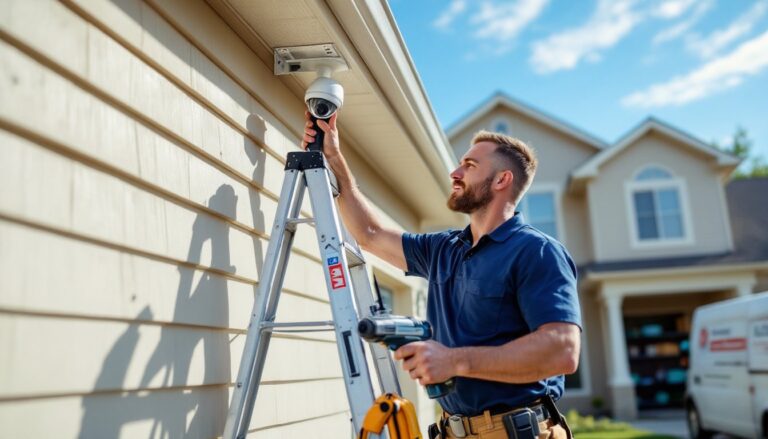
2. Mount cameras 8 to 10 feet high
This height keeps cameras out of easy reach but low enough to capture faces clearly. Avoid mounting above 12 feet unless you’re only monitoring activity, not identification. Use a stud finder to locate solid wood framing or masonry anchors for brick or stucco.
3. Angle cameras downward at 15 to 30 degrees
Pointing cameras too high captures hats and foreheads: too low catches feet and pavement. A slight downward tilt captures faces and upper bodies. For driveways, angle toward the approach path, not straight down the lane.
4. Run cabling neatly and protect connections
For PoE cameras, run Cat6 cable through walls, attic spaces, or conduit to the NVR. Outdoor cable runs should use UV-resistant Ethernet or coax rated for direct burial if running underground. Seal entry points with silicone caulk to prevent water intrusion. Battery or Wi-Fi cameras skip cabling but require strong signal strength, test connectivity before final mounting.
5. Test the view before final mounting
Power up the camera, check the live feed, and adjust the angle. Walk through the monitored area to confirm coverage and focus. Some cameras include motorized varifocal lenses you can adjust remotely: others require manual lens adjustment.
6. Enable motion detection and configure alerts
Set motion zones to exclude streets, sidewalks, or trees that trigger false alerts. Adjust sensitivity to balance between catching real events and avoiding spam. Schedule recording or alerts for specific times if you only need monitoring overnight or when you’re away.
7. Secure your network
Change default usernames and passwords immediately. Use WPA3 encryption on your Wi-Fi network and enable two-factor authentication on camera apps. Isolate cameras on a separate VLAN or guest network if you have a more advanced router. According to CNET, many breaches exploit factory-default credentials.
Safety notes: Wear safety glasses when drilling into masonry or wood overhead. Use a voltage tester if running cable near electrical wiring. If mounting on a two-story home, use a stable ladder with a spotter or hire a professional. Running cable through finished walls may require drywall patching and paint touch-ups.
Most DIYers can install a 2MP camera system over a weekend with basic tools: drill/driver, 1/4″ and 3/8″ masonry bits, fish tape or rods, wire strippers, crimpers (for custom Ethernet cables), and a laptop or smartphone for configuration. If you’re installing four or more cameras with an NVR, budget extra time for network setup and testing.
Conclusion
Two-megapixel cameras remain a practical, cost-effective choice for homeowners who need reliable monitoring without overspending on resolution they won’t use. They deliver clear 1080p footage in typical residential scenarios, porches, driveways, garages, and side yards, and integrate smoothly with modern NVRs and smart home platforms. Pair them with proper positioning, quality lenses, and solid night vision, and you’ll capture the details that matter. For larger properties or critical zoom needs, step up to 4MP or higher. But for most homes, a well-chosen 2MP system gets the job done without the storage bloat or budget strain.